1 August 2026 · Comparison
Best netcup Alternatives in 2026: Who Should Leave
The short answer
netcup raised prices 18.5-24% in 2026, but so did everyone else. Four honest alternatives for the four real reasons people leave.
The one-sentence verdict: Leave netcup for Hetzner if you have outgrown a single box and need a real cloud platform. Leave for Datalix if absolute lowest price is everything and you can tolerate stock shortages. Leave for Cherry Servers if you need bare metal, crypto payments, or global locations. Leave for OVHcloud if you want unlimited traffic and a cheaper entry. And here is the honest counter: if you are leaving netcup to escape price hikes, the entire German budget-hosting market moved in 2026, so the hike alone is a weak reason to switch.
Affiliate disclosure: Some links in this post may be affiliate links. If you click through and make a purchase, SaaSpicious may earn a commission at no extra cost to you. We compare honestly regardless.
The 2026 price move that started this search
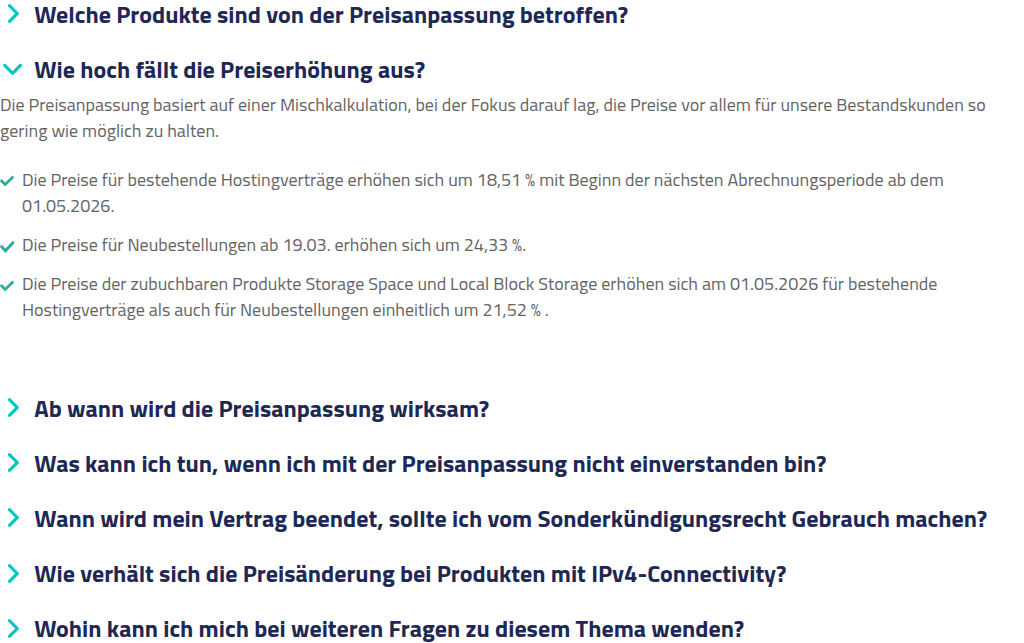
netcup formally raised prices in March 2026, and the official FAQ is blunt about the numbers. Existing customer contracts went up 18.51% from the next billing period (earliest May 2026). New orders went up 24.33% from March 19. Storage Space and Local Block Storage went up a uniform 21.52%. netcup gave customers a special termination right (Sonderkündigungsrecht) for up to three months after the announcement email.
Prices accurate as of August 2026; check the vendor’s site for current rates.
The reason given is the same one every host in this market cites: RAM and NVMe prices exploded because AI data centers are buying the supply. netcup’s CEO posted a detailed statement in the netcup forum (“RAMpocalypse: We need to talk about pricing”) and the company published a blog post in July 2026 walking through why hosting prices are rising.
Here is the part that matters for this post: netcup’s hike was mid-pack, not the worst. Heise’s June 2026 cloud-hosting price check found Hetzner raised prices twice in 2026, and as of June 15 some VPS segments went up more than 200% (3x). OVHcloud went the other direction, redesigning its VPS range to launch a cheaper entry model. So “leave netcup” and “prices stop rising” are two different decisions, and this post treats them separately.
Who should NOT leave netcup
Before the four alternatives, the honest case for staying. netcup still sells guaranteed dedicated EPYC 9645 cores with DDR5 ECC RAM at prices no one else in this list matches at the low end: the Root Server RS 1000 G12 costs €12.79/mo incl. 19% VAT (12-month term) for 4 dedicated AMD EPYC 9645 cores, 8 GB DDR5 ECC, and 256 GB NVMe, and the VPS 500 G12 entry is €5.91/mo incl. 19% VAT.
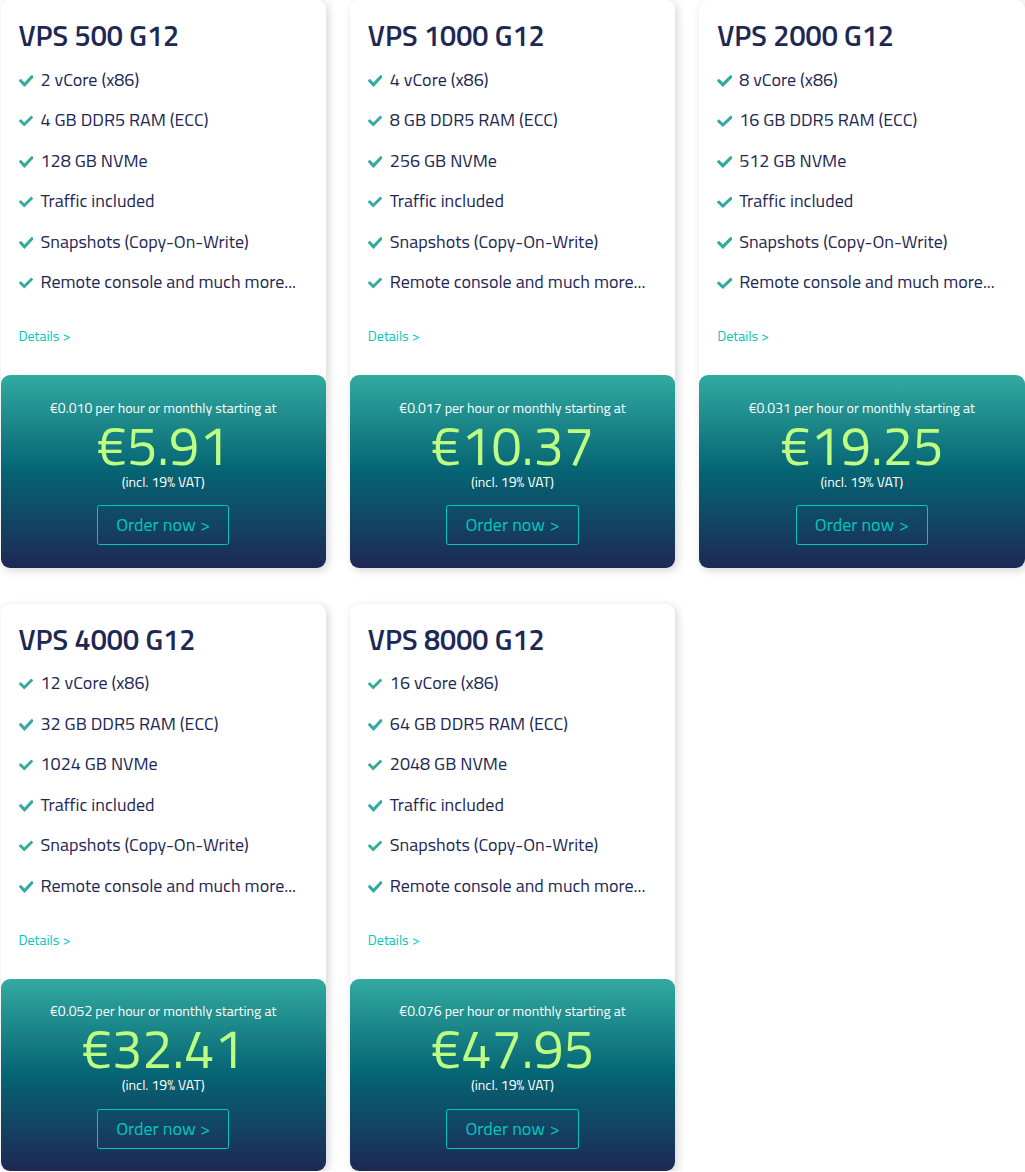
If what you want is a single, well-documented German VPS or a dedicated-core root server with excellent hardware specs, and your bill increase is tolerable, the switch costs more in migration time than it saves. netcup’s VPS line has no spec-beater at similar money right now: the competitor with comparable platform maturity is Hetzner, and its cheapest tier is currently not orderable at all (more below).
The people this post is for: you need something netcup does not sell (a load balancer, private networking, unlimited traffic, a global footprint), you need a materially lower bill, or your netcup order keeps landing on “sold out” and you want a provider with actual stock. Stock is a real netcup friction point right now, not just a competitor one: the ARM64 line has been repeatedly sold out through 2026, and netcup’s own page currently reads “Our VPS ARM are currently sold out”.
Alternative 1: Hetzner - leave for the platform
Hetzner is the closest thing to netcup’s direct replacement that is also a real cloud platform. Same German DNA, own data centers (Falkenstein and Nuremberg, plus Helsinki, Ashburn, Hillsboro, and Singapore), 400,000+ customers, and a 99.9% SLA with credits. What you get that netcup does not sell: free stateful firewalls, private networks (vSwitch), a load balancer, block storage, S3 object storage, floating IPs, one-click apps, and an API with official Terraform/Ansible/K8s support.
Where it wins for a netcup leaver: if you have outgrown a single box, this is the upgrade path. Private networking, load balancing, object storage, and infrastructure-as-code are all native, not add-ons you assemble yourself. Support is 24/7 email. The spec-level head-to-head lives in our netcup vs Hetzner post; the short version is Hetzner wins on ecosystem, netcup wins on raw hardware value at the low end.
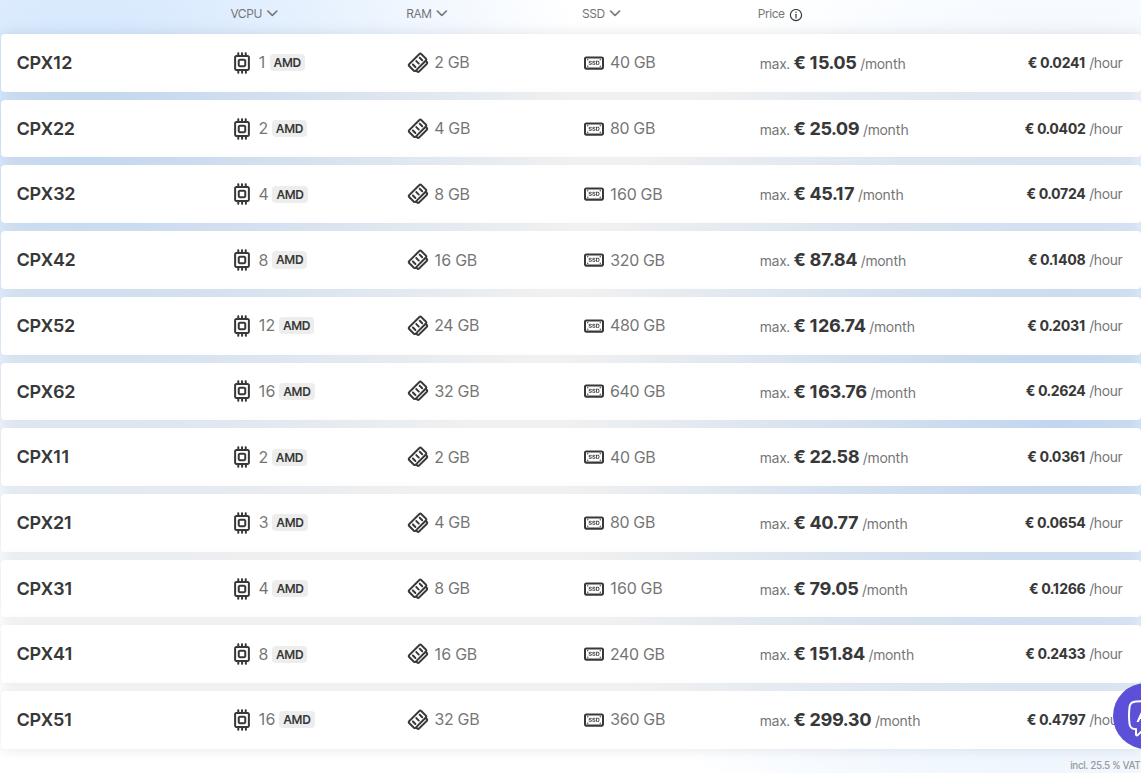
Where Hetzner loses (2026 edition): the June 2026 hikes were the steepest in the market, with some VPS segments up more than 200% (3x) per heise’s price check, effective June 15. Right now its cheapest tier is not buyable: the entire Cost-Optimized line (CX23, CAX11, CX33, CAX21, CX43, CAX31, CX53, CAX41) shows “not available” on the live cloud page, which makes the “cheap Hetzner” argument hollow today. Entry pricing on the available tiers starts around €22.58/mo incl. 25.5% VAT. There is no Windows, no phone support, and US locations carry roughly 1 TB of included traffic versus 20 TB in the EU.
Alternative 2: Datalix - leave for the absolute lowest price
Datalix is the cheapest buyable VPS in the German market right now, and unlike most budget hosts it is a real KVM provider in Frankfurt (Equinix FRA-5/7/8) with its own AS (AS58087), free backups, and DDoS protection. The Ryzen Gen2 Small is €2.45/mo incl. VAT, 1 vCore / 2 GB / 20 GB, in stock and it is currently orderable, which has not always been true this year.
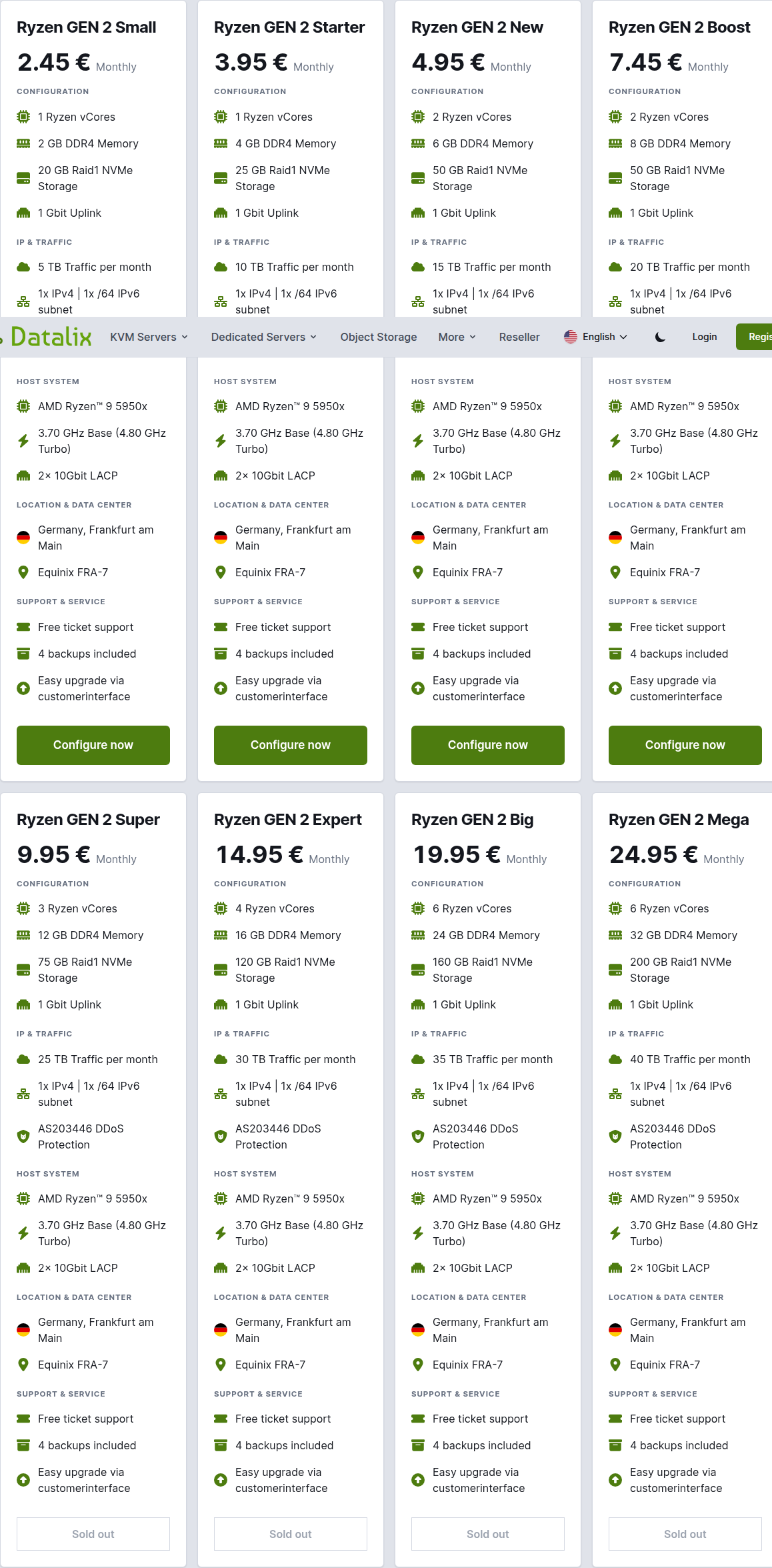
Where it wins for a netcup leaver: the price. Nothing in this post beats €2.45 for 1 vCore / 2 GB / 20 GB with 5 TB traffic, four free backups, and SmartMitigate DDoS protection. It is prepaid, so there is no contract and no cancellation dance, and Windows deploys with one click. If you need a cheap second server or a throwaway project box, this is the pick. Our Datalix vs Hetzner post covers the head-to-head in detail.
Where Datalix loses: stock scarcity is the persistent theme, not a one-off. In July 2026 only 2 of the 24 IPv4-capable plans were orderable at all; today the low Gen2 tiers (Small through Boost) are back in stock, but everything above them - Super and up, plus the entire Ryzen Gen4 line - is still sold out. It is a single-location provider with daytime-only support (9:00-22:00 CET), no SLA with credits, no private networking, and no load balancer. And the prepaid model has a trap: if you forget to top up, the server auto-deletes five days after the paid term ends. Datalix is a server you rent, not an infrastructure partner.
Alternative 3: Cherry Servers - leave for global reach, bare metal, and crypto
Cherry Servers is the only one of these four with an official cash affiliate program (Cherry Servers runs one), which matters here only because it is also the honest pick for a specific profile: someone who wants bare metal and virtual servers under one roof, 24/7 human support, or the ability to pay in crypto. It operates seven locations (Lithuania, Amsterdam, Stockholm, Frankfurt, Chicago, Singapore, Tokyo) and carries a formal 99.97% uptime SLA with credits plus a 15-day money-back guarantee.
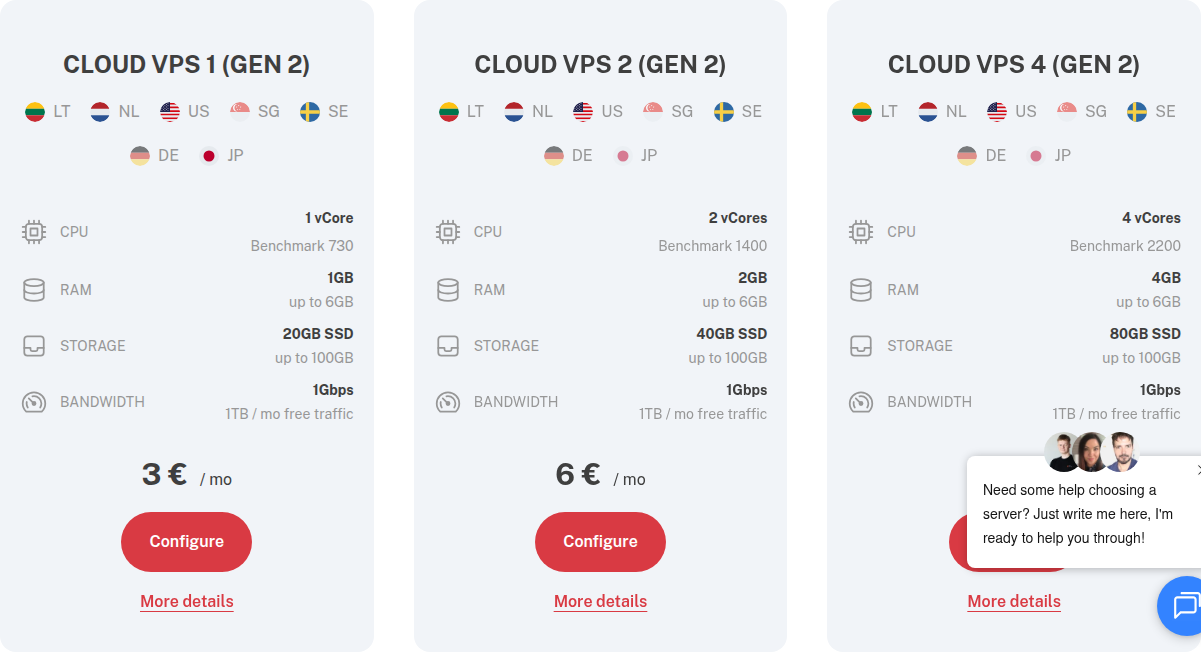
Where it wins for a netcup leaver: if you are leaving because netcup is Germany-only in effect (its US and Singapore locations carry surcharges) or because you want dedicated hardware, Cherry’s bare metal starts from €0.084/hr for instant dedicated servers and its virtual servers start from €3/mo for 1 vCore / 1 GB / 20 GB / 1 TB traffic. Support is genuinely 24/7 with a personal account manager, and 20+ payment methods include BTC, ETH, USDC, and others. The Web3/Solana specialization is niche but real.
Where Cherry Servers loses: the entry price is the story. Its cheapest virtual server (around €3/mo) costs about the same as netcup’s VPS 500 G12 while delivering far less RAM and storage per euro, and there is no sub-€3 tier at all. VPS is also not the core business here; bare metal is, and the product depth around virtual servers is thinner than Hetzner’s or netcup’s. It is a Lithuanian company, not German - fine under GDPR, different if you wanted German sovereignty. Our Cherry Servers vs Hetzner post goes deeper on the tradeoffs.
Alternative 4: OVHcloud - leave for unlimited traffic and a cheaper entry
OVHcloud answered the 2026 price pressure differently: instead of a hike, it redesigned its VPS range. The new “VPS 2027” line launched June 17, 2026, with a new entry model - VPS-1 from $4.54/mo - cheaper than the old entry and cheaper than netcup’s current VPS entry. Every plan in the range includes unlimited traffic, IPv4+IPv6, daily backup of the last 24 hours, and anti-DDoS by default.
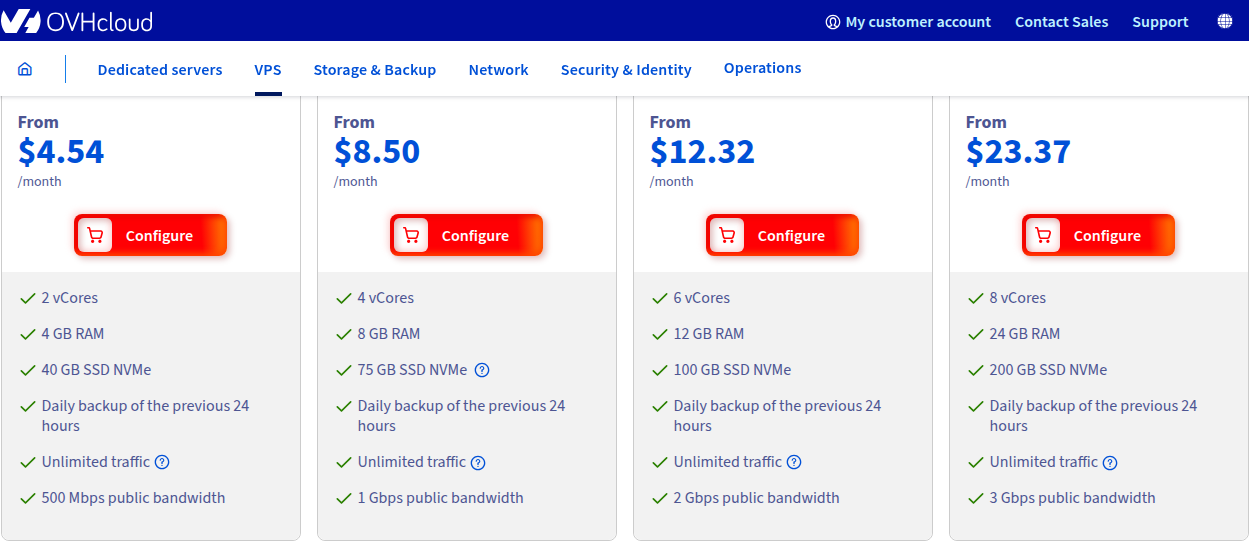
Where it wins for a netcup leaver: unlimited traffic on every VPS is the headline - netcup throttles at 2-3 TB per 24 hours, and Hetzner’s US plans only include ~1 TB. OVHcloud also brings 22+ data center locations, a by-default anti-DDoS posture, and the whole Public Cloud ecosystem (managed Kubernetes, databases, S3 object storage, vRack private networking) when you outgrow a single VPS. It is the scale play: 1.6M customers, and it now undercuts netcup’s entry price while the other alternatives raise theirs.
Where OVHcloud loses: support reputation on unmanaged products is the persistent weakness - tickets can be slow and the product sprawl (VPS vs Public Cloud vs bare metal, three control panels) confuses people coming from netcup’s tidy SCP. Provisioning is slower (around 13 minutes average on their own figures). The VPS 2027 specs shifted versus the old line, so the upgrade path for anyone already on OVH’s older VPS is a migration, not an in-place bump. And it is French, not German - sovereignty and data-location expectations differ from netcup’s.
The comparison table
| Dimension | netcup | Hetzner | Datalix | Cherry Servers | OVHcloud |
|---|---|---|---|---|---|
| Entry VPS buyable today | €5.91/mo incl. 19% VAT | CPX11 from €22.58/mo incl. 25.5% VAT; CX tier sold out | €2.45 Gen2 Small (in stock) | €3/mo | from $4.54/mo |
| Dedicated-core option | RS 1000 G12 (4 dedicated EPYC cores) at €12.79/mo incl. 19% VAT | CCX13 from €54.58/mo | No (VPS only) | Yes (Cloud VDS / dedicated from €0.084/hr) | Public Cloud dedicated from $0.545/hr |
| Traffic | Flatrate, throttled at 2-3 TB/24h | 20 TB EU / ~1 TB US | Hard limits, throttled to 80 Mbit/s when exceeded | 1-35 TB by plan | Unlimited on all VPS |
| Backups | Snapshots included; no auto-backup product | Add-on (paid) | 4 free backups included | Backup storage from €2.99/50 GB/mo | Daily backup of last 24h included |
| DDoS protection | Included (Anexia) | Not advertised on cloud VPS | Included (SmartMitigate) | Optional | Included by default |
| Load balancer | No | Yes | No | Yes | Yes |
| Object storage | No integrated S3 | Yes (S3) | Yes (S3, separate product) | No | Yes (S3) |
| Private networking | No | Yes (vSwitch) | No | Yes (VLANs) | Yes (vRack) |
| Locations | 5 (VIE/NUE/AMS/MNZ/SIN) | 6 (FSN/NBG/HEL/ASH/HIL/SIN) | 1 (Frankfurt) | 7 | 22+ |
| SLA | 99.9% on Root Server only | 99.9% with credits | 99.2% (footer, no credits) | 99.97% with credits | 99.9% |
| Support | Ticket + phone, German-first | 24/7 email | 9:00-22:00 CET | 24/7 email/chat/phone + account manager | Ticket; weak on unmanaged |
| Windows | 180-day trial, self-install | Unsupported | Click-to-install | Yes | Yes |
| Crypto payments | No | No | No | Yes (12+ coins) | No |
| Affiliate program | No | Referral credits only | Reseller program | Yes, official | Partner/reseller program |
Prices accurate as of August 2026; check the vendor’s site for current rates.
Bottom line
Pick Hetzner if you are leaving for platform reasons: private networks, load balancing, object storage, Terraform, and an SLA with teeth. Pick Datalix if you are leaving for price and only need one cheap Frankfurt server - but check stock before you plan around it. Pick Cherry Servers if you need bare metal, global locations, crypto, or 24/7 humans, and can stomach a higher entry price. Pick OVHcloud if unlimited traffic and a sub-€4 entry beat everything else.
And the honest reverse: do not leave netcup for price alone. Its hike was announced with advance notice, came with a special termination right, and was smaller than Hetzner’s on the worst-affected segments. If your only complaint is the new bill, price-shop first - you may find the alternatives raised more. If your complaint is capability, stock, or support, the four above are the realistic destinations.
If you are weighing the two German giants specifically, netcup vs Hetzner has the spec-level showdown. For the reverse journey (leaving Hetzner), see our roundup of Hetzner alternatives, which covers both the budget indies and the mainstream clouds. And if you went the other direction on object storage, netcup object storage vs Hetzner covers that niche.