20 June 2026 · Comparison
Sellfy vs Shopify for Digital Products: Which Costs Less?
The short answer
Shopify needs a stack of paid apps to match Sellfy's built-in digital product features. Here's the honest cost breakdown in USD.
Affiliate disclosure: This article contains affiliate links. If you click and make a purchase, we may earn a commission at no extra cost to you. We check every price against the vendor’s own live pricing page and say when we checked.
Verdict: Pick Sellfy if you sell digital products, subscriptions, or print-on-demand merch and want everything built-in at one flat price with 0% platform transaction fees. Pick Shopify if you sell both physical and digital products at volume, need marketplace integrations (Amazon, eBay, TikTok Shop), or need advanced SEO and blogging tools.
See also: Sellfy vs Gumroad: Which Digital Product Platform Wins? and our broader Sellfy vs Shopify vs WooCommerce vs Wix comparison.
Shopify is the default recommendation for anyone looking to sell online. But for creators who only sell digital downloads — ebooks, courses, presets, templates, music — Shopify is rarely the right answer straight out of the box. It requires a stack of paid apps to match what Sellfy includes natively, often for less money.
Here is the real cost comparison, feature by feature.
Pricing: What You Pay Per Month
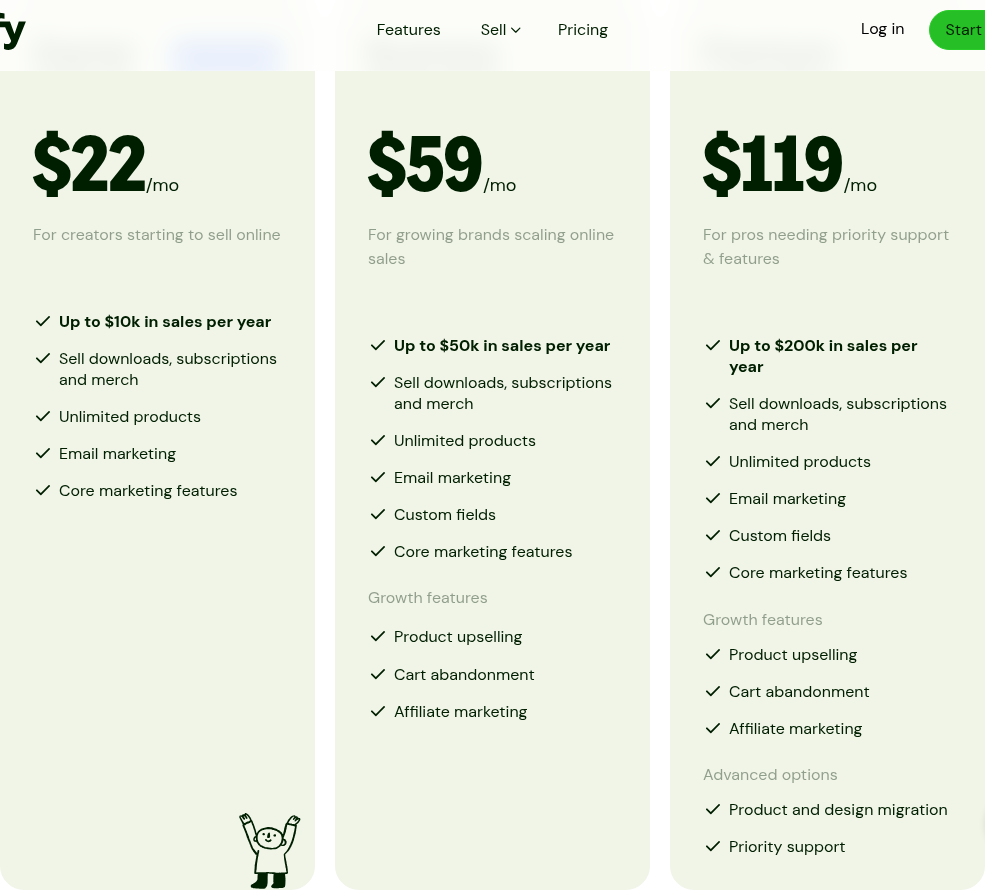
Sellfy’s pricing is straightforward: three plans, no transaction fees on any of them. You pay your subscription and the standard payment processing fee from PayPal or Stripe (Sellfy’s FAQ states “typically 2.9% + $0.30”; PayPal’s published US rate as of June 2026 is 2.99% + $0.49 for standard domestic credit/debit card payments).
| Plan | Monthly | Annual (per month) | Annual Sales Cap | Overage Fee |
|---|---|---|---|---|
| Starter | $29/mo | $22/mo | Up to $10K | 2% |
| Business | $79/mo | $59/mo | Up to $50K | 2% |
| Premium | $159/mo | $119/mo | Up to $200K | 2% |
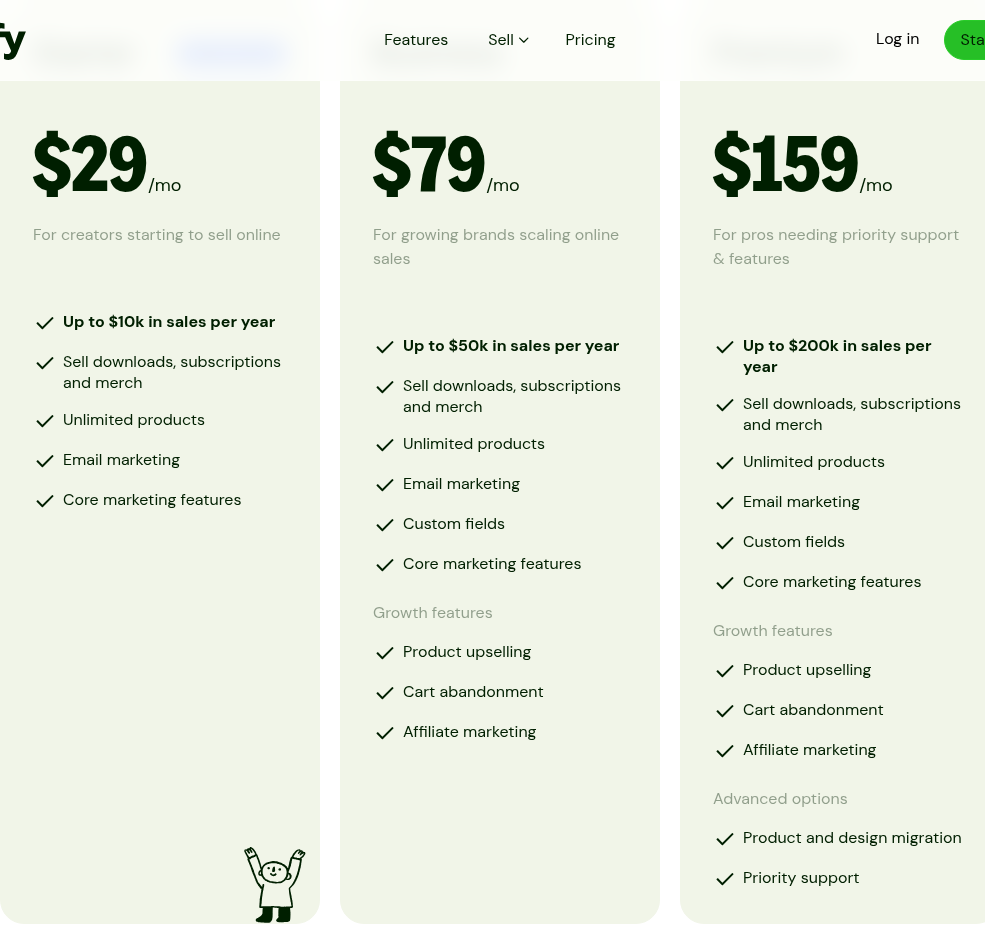
Prices accurate as of June 2026; check sellfy.com/pricing for current rates.
Shopify offers more plan tiers and charges a payment processing fee on every transaction (its card rate when using Shopify Payments), plus a higher fee if you use a third-party payment processor.
| Plan | Monthly | Annual (per month) | Online Card Rate | Third-Party Fee |
|---|---|---|---|---|
| Basic | $39/mo | $29/mo | 2.9% + 30¢ | 2% |
| Shopify/Grow | $105/mo | $79/mo | 2.7% + 30¢ | 1% |
| Advanced | $399/mo | $299/mo | 2.5% + 30¢ | 0.6% |
| Plus | Starts ~$2,300/mo | N/A | Most competitive rates | 0.2% |
Prices accurate as of June 2026 (USD); check shopify.com/pricing for current rates. Note that Shopify displays prices in your local currency based on your location — the figures above are the published US dollar prices. Shopify Payments is available only in select countries; check availability for your country.
The key nuance most comparisons get wrong: Shopify’s “online card rate” is its payment processing fee, much like Stripe or PayPal. On Basic (2.9% + 30¢) it’s roughly the same as what you’d pay a processor through Sellfy; on higher tiers it’s actually a bit lower. Where Shopify costs extra is the third-party transaction fee — 2% on Basic, dropping to 0.2% on Plus — which it charges on top of your processor’s cut whenever you use any payment provider other than Shopify Payments. Sellfy never charges a platform fee on any plan.
The “App Stack Tax”: Matching Sellfy Business on Shopify
This is where the hidden cost of Shopify reveals itself. Sellfy Business at $59/mo (annual) includes digital delivery, affiliate marketing, upselling, cart abandonment recovery, email marketing, and print-on-demand — all native, no apps, no extra subscriptions.
To match that feature set on Shopify, here is what you need:
| Feature | Sellfy Business | Shopify Equivalent | Shopify Cost |
|---|---|---|---|
| Digital delivery | Built-in | Digital Downloads app (by Shopify) | Free, but 5GB file limit |
| Affiliate marketing | Built-in | Refersion app | $39/mo (Launch) + 3% of affiliate sales |
| Product upselling | Built-in | Upsell app (e.g. Zipify, Bold Upsell) | ~$10-$30/mo |
| Cart abandonment | Built-in | Built-in (all plans) | Free |
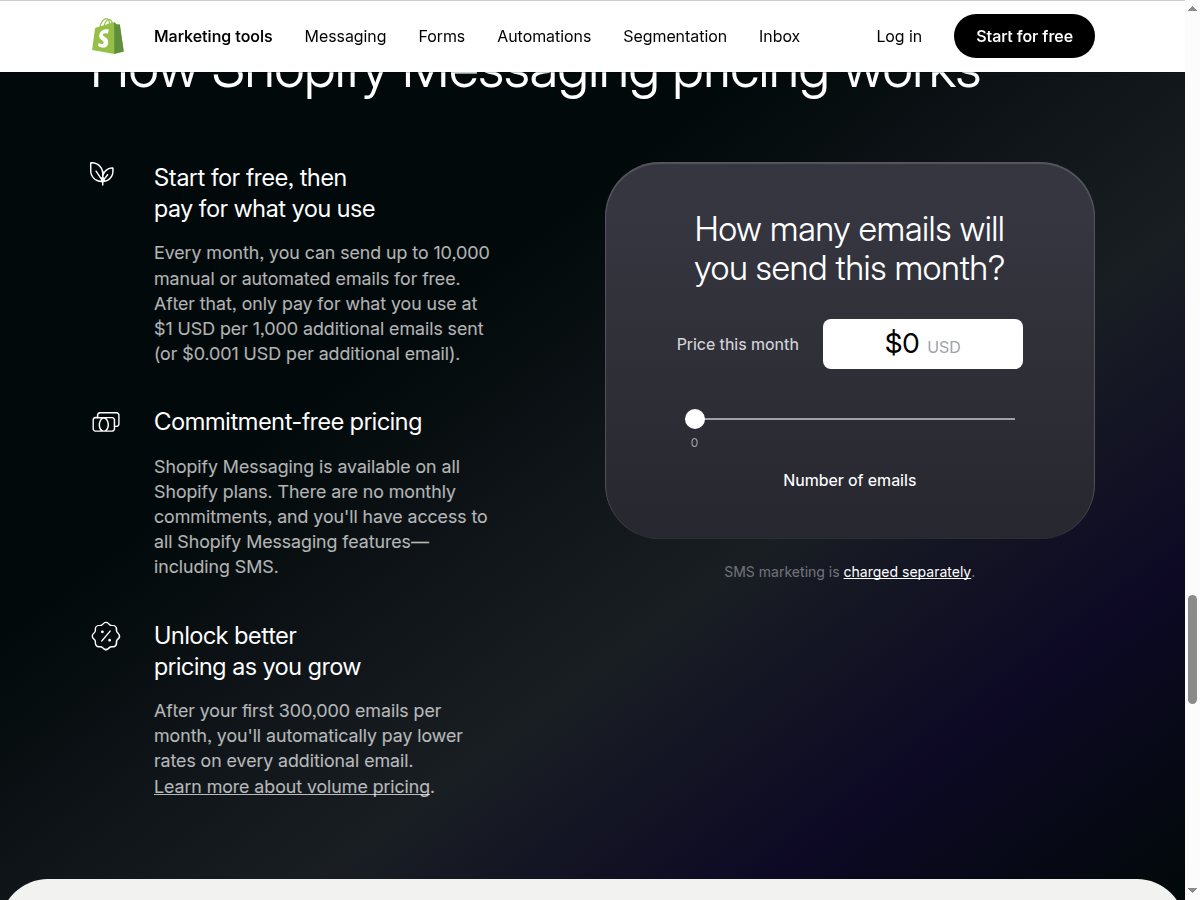
| Email marketing | Built-in (10K credits) | Shopify Email (10K free) | Free up to 10K, then $1/1,000 emails |
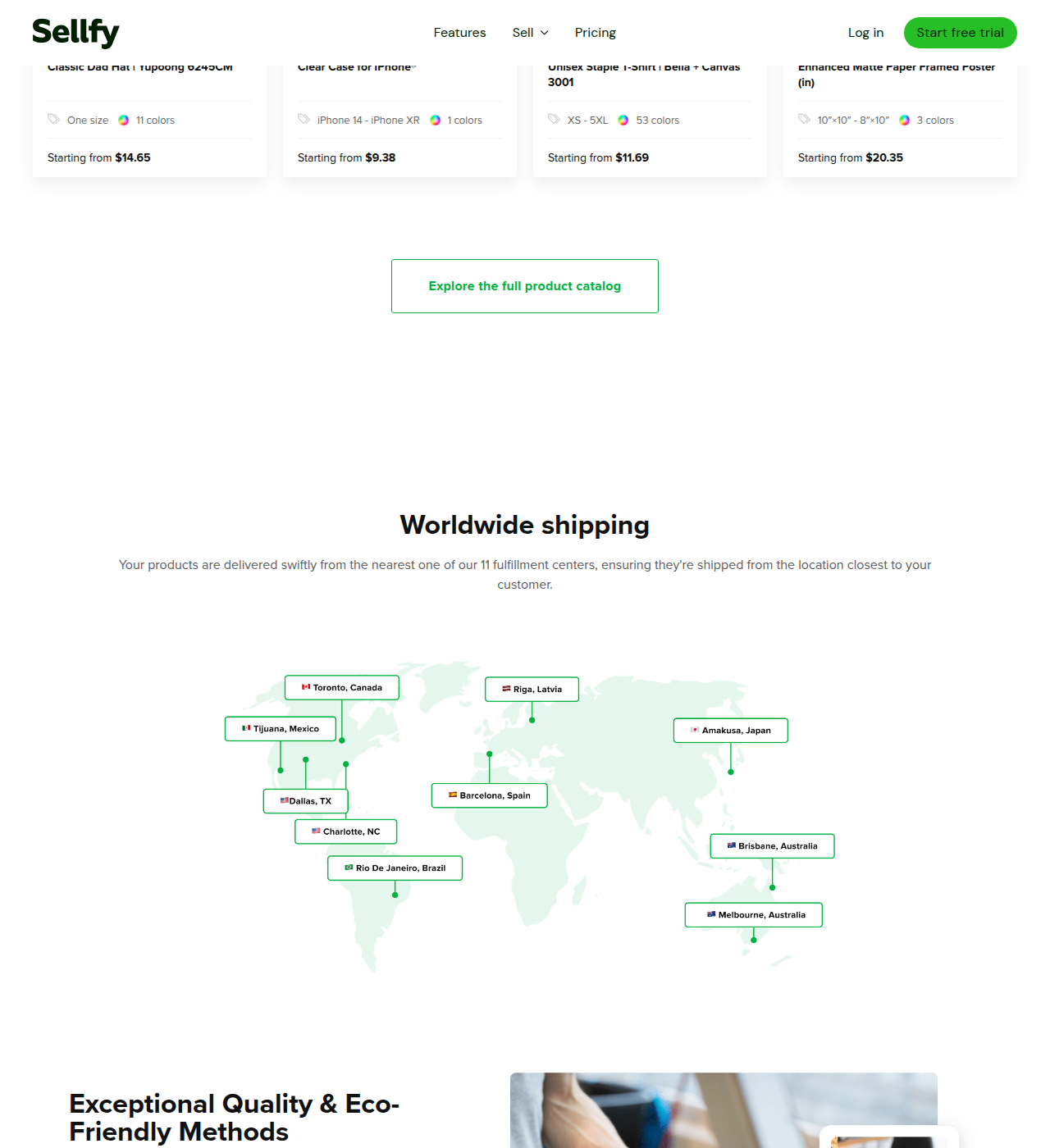
| Print-on-demand | Built-in (11 fulfillment centers) | Printful/Printify app | Free install, per-item cost |
| Subscriptions | Built-in | Subscription app (e.g. RecurrinGO!) | Varies, premium apps ~$10-$50/mo |
| Video streaming | Built-in | Separate solution needed | N/A / not easily available |
| PDF stamping | Built-in | App required | N/A / not easily available |
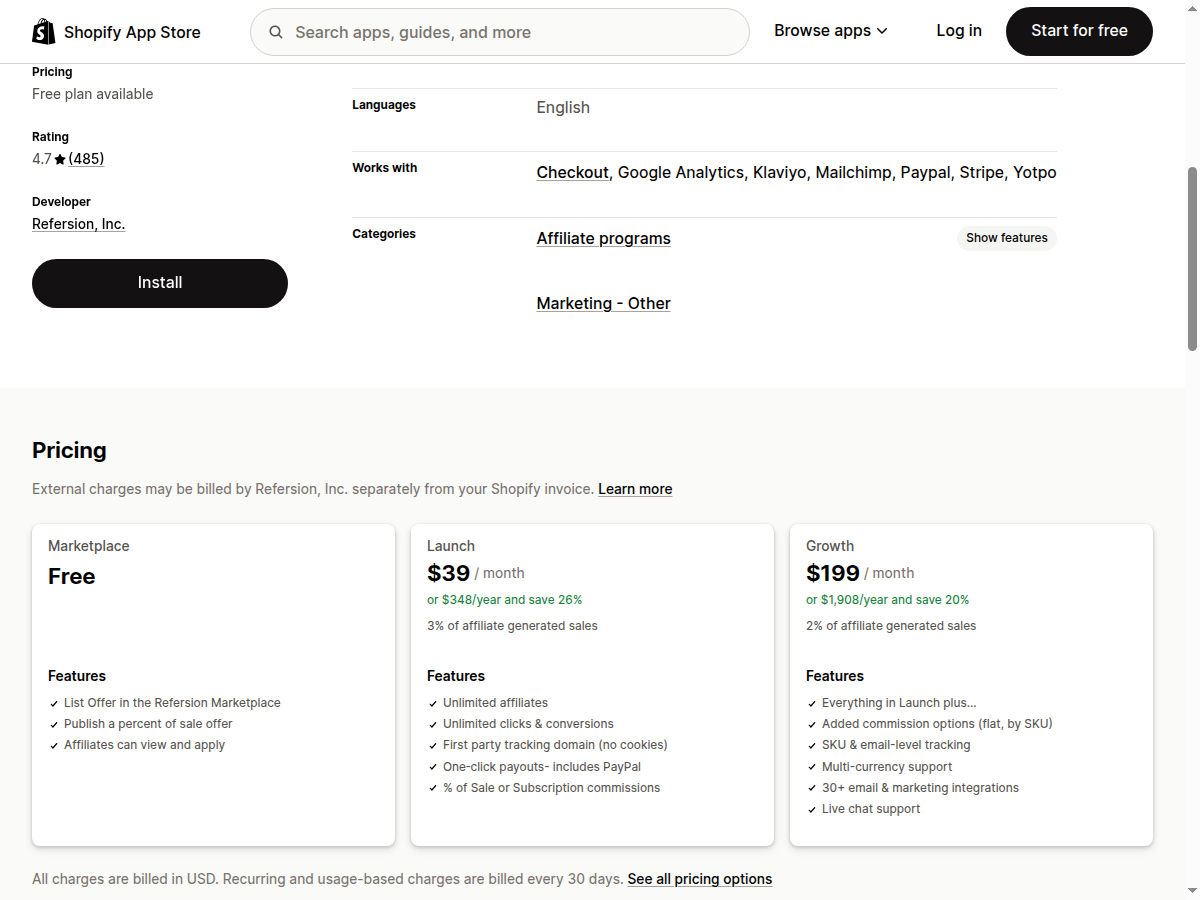
Minimum Shopify stack to match Sellfy Business:
- Shopify Basic or Grow plan: $29-$79/mo (annual)
- Refersion Launch: $39/mo plus 3% of affiliate-generated sales
- Upselling app: ~$10-$30/mo
- Total: roughly $78-$148/mo vs Sellfy’s $59/mo
And you still do not get native video streaming, PDF stamping, subscriptions, or print-on-demand without adding more apps.
Where Sellfy Wins
All-in-one digital commerce. Sellfy was built for digital creators. Digital delivery, file hosting, download limits, PDF stamping, and video streaming are native — not apps someone bolted on. One product can hold up to 50 files with individual file sizes of 10GB (Starter), 15GB (Business), 20GB (Premium).
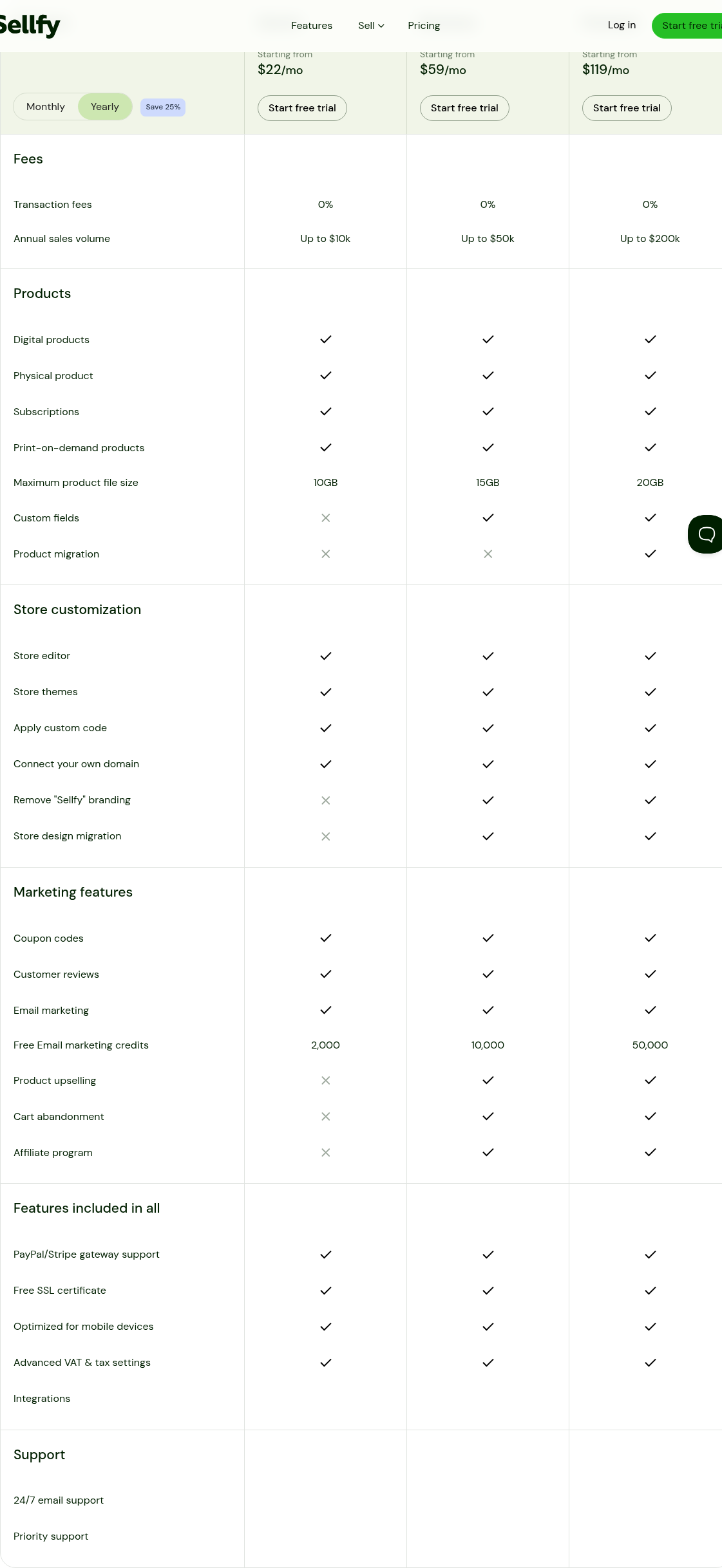
No platform fee, ever. You pay your subscription plus PayPal or Stripe’s standard processing fee — no additional platform cut from every sale. On Shopify, if you process payments through anything other than Shopify Payments, you pay a transaction fee on top of your processor’s cut: 2% on Basic, which is $1,000 on $50K in annual sales. Sellfy charges 0% on every plan.
Native affiliate marketing at $59/mo. On Shopify, the leading affiliate app (Refersion) costs $39/mo on its Launch plan, plus it takes 3% of every affiliate sale on top. Sellfy includes affiliate marketing in the Business plan along with upselling, cart recovery, and email marketing — no per-sale commission.
Print-on-demand built in. Sellfy’s POD ships from 11 fulfillment centers globally. On Shopify, you need to connect Printful or Printify separately.
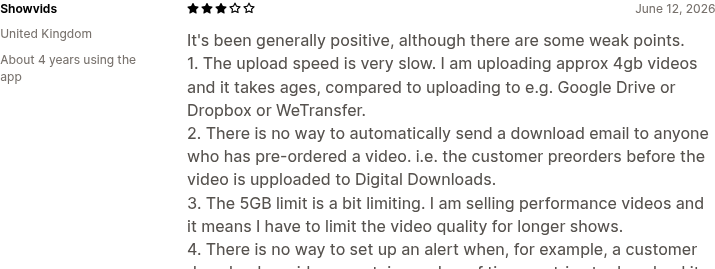
File size and streaming. Sellfy supports up to 20GB files and includes video streaming to reduce piracy. Shopify’s official Digital Downloads app caps at 5GB and has no streaming.
Setup speed. A Sellfy store with products, checkout, and payment processing can be live in under 30 minutes. A Shopify store with digital delivery, affiliate marketing, upselling, and subscriptions installed and configured takes hours.
Where Shopify Wins
Massive app ecosystem. Shopify has thousands of apps covering every conceivable commerce need. If Sellfy doesn’t offer a native integration, you are limited to Zapier and webhooks. Shopify has a dedicated app for nearly everything.
Multi-channel selling. Shopify integrates natively with Amazon, eBay, Google Shopping, Facebook, Instagram, TikTok Shop, and Walmart Marketplace. Sellfy supports social selling through product links only — no marketplace integrations.
SEO and content marketing. Shopify includes a built-in blog, advanced SEO tools, editable meta tags, alt text, and automatic sitemaps. Sellfy has basic SEO features only and no blogging platform. If organic traffic is your primary growth channel, Shopify gives you far more tools.
Physical products. If you sell physical goods alongside digital downloads, Shopify is the clear winner. Inventory management across up to 10 locations (Basic plan), shipping rate calculations, and POS for in-person sales are built in.
No sales caps. Shopify has no annual revenue limits. Sellfy’s plans cap at $10K/$50K/$200K per year with a 2% overage fee if you exceed. Once you pass $200K/year, you need to negotiate a custom Sellfy plan.
AI and commerce tools. Shopify includes Sidekick (AI assistant), agentic commerce for selling in AI chats, an AI website builder, and Shopify Capital/Balance/Credit for business financing. Sellfy offers none of these.
More free email. Shopify gives 10,000 free emails per month on all plans, then $1 per 1,000 additional emails. Sellfy’s Starter plan includes only 2,000 email credits (Business matches Shopify at 10,000).
Where Sellfy Loses (Honest Downsides)
- You bring your own traffic. Sellfy is not a marketplace (unlike Etsy or Gumroad Discover). No one browses Sellfy looking for products. If you don’t already have an audience on social media, YouTube, or an email list, you’ll struggle to get sales.
- No blog, weaker SEO. Without a blog and advanced SEO controls, driving organic search traffic to a Sellfy store is harder than on Shopify. Content marketing — a key strategy for digital creators — is not supported.
- Annual sales caps with overage fees. If you exceed your plan’s sales limit, you either upgrade or pay a 2% fee on the overage. Shopify has no such limits.
- Limited integrations. No real app marketplace. Your options are Google Analytics, Zapier, webhooks, and a handful of ad pixel integrations. If Sellfy doesn’t do what you need natively, there’s often no workaround.
- Email credit limits on the Starter plan. Starter includes only 2,000 email credits/month vs Shopify’s 10,000. For email-heavy creators on the entry plan, this is a real constraint.
- Smaller company, less brand trust. Shopify is a public company processing billions in transactions. Sellfy is a smaller private operation — this matters for business continuity planning.
- No staff accounts. Sellfy is single-owner. Shopify supports team accounts starting at the Grow plan (5 staff).
- Store customization is basic. You can adjust colors, logos, and layouts, but the theme flexibility and customization depth don’t compare to Shopify’s 100+ themes and full code access.
Where Shopify Loses (Honest Downsides)
- “Death by a thousand subscriptions.” The apps that make Shopify functional for digital creators add up fast. A $29/mo Basic plan can balloon to $100+/mo once you add affiliate, upselling, subscriptions, and POD apps.
- No built-in affiliate marketing at any tier. Despite being the world’s largest ecommerce platform, Shopify has never built a native affiliate/referral system. You pay a third-party app $39/mo or more (plus a cut of each sale) for what Sellfy provides at $59/mo total with no per-sale commission.
- Steep learning curve. Setting up a Shopify store with apps, configuring digital delivery, connecting payment processing, and customizing themes is significantly more complex than Sellfy’s straightforward setup. Expect hours, not minutes.
- File size limits on the official app. Shopify’s own Digital Downloads app caps uploads at 5GB. For video courses, large design files, or software, this is restrictive.
- The third-party payment penalty. If you don’t use Shopify Payments, Shopify adds a transaction fee (2% on Basic, down to 0.2% on Plus) on top of your processor’s fees. Sellfy never charges a platform fee.
- Overkill for digital-only creators. Shopify is built for physical product commerce. Its inventory management, shipping calculations, and POS features are unnecessary overhead for someone selling a $20 ebook or a $50 preset pack.
- No native video streaming. You’ll need a separate video hosting solution (Vimeo, Wistia, or YouTube unlisted) if you sell video content through Shopify.
Which Should You Pick?
Pick Sellfy if:
- You sell digital products, subscriptions, or POD merch as your primary offering
- You want an all-in-one platform without managing multiple app subscriptions
- You are under $200K/yr in sales (or negotiate a custom plan past that)
- You already have an audience (social media, YouTube, email list)
- You want affiliate marketing and upselling without extra monthly costs
- You sell large files (video courses, design assets, software) over 5GB
Pick Shopify if:
- You sell both physical and digital products
- You need marketplace integrations (Amazon, eBay, TikTok Shop, Google Shopping)
- You plan to scale well past $200K/yr
- You rely on SEO and content marketing to drive traffic
- You need a blog, advanced analytics, or a large app ecosystem
- You need staff accounts for a team
- You want POS for in-person sales
Pick neither if:
- You have no audience yet and need a marketplace to bring you traffic. Consider Etsy (for digital downloads), Gumroad, or Creative Market instead.
- You only sell one or two small digital files occasionally. Gumroad’s free plan (10% fee) or Payhip (free plan, 5% fee) may be cheaper than a monthly subscription.
Start your free Sellfy trial →
Sellfy vs Shopify: FAQ
Is Sellfy cheaper than Shopify for selling digital products?
For a digital-only creator, yes. Sellfy Business at $59/mo (annual) includes digital delivery, affiliate marketing, upselling, cart recovery, email marketing, and print-on-demand natively. Matching that feature set on Shopify costs roughly $78-$148/mo (Basic or Grow plan plus Refersion at $39/mo plus an upselling app), and Refersion also takes 3% of every affiliate sale. At the entry level the gap is smaller: Sellfy Starter is $22/mo annual vs Shopify Basic at $29/mo annual.
Does Sellfy charge transaction fees?
Sellfy charges 0% platform transaction fees on every plan — you pay only your subscription plus PayPal or Stripe’s standard processing fee (typically 2.9% + $0.30 per Sellfy’s FAQ). The one exception: if you exceed your plan’s annual sales cap ($10K on Starter, $50K on Business, $200K on Premium), a 2% overage fee applies until you upgrade.
Can Shopify sell digital products?
Yes, but not well out of the box. Shopify’s official Digital Downloads app is free but caps file uploads at 5GB and offers no video streaming or PDF stamping. Sellfy supports individual files of 10-20GB depending on plan (up to 50 files per product) with native streaming and PDF stamping. For video courses, large design assets, or software, Shopify’s 5GB limit is the dealbreaker.
Which is easier to set up, Sellfy or Shopify?
Sellfy. A Sellfy store with products, checkout, and payment processing can be live in under 30 minutes because everything is built-in. A comparable Shopify setup — installing and configuring digital delivery, affiliate, upselling, and subscription apps — takes hours and leaves you managing multiple app subscriptions.
What are Sellfy’s sales limits?
Sellfy’s plans cap annual sales at $10K (Starter), $50K (Business), and $200K (Premium), with a 2% fee on any overage; past $200K/year you negotiate a custom plan. Shopify has no revenue caps on any plan, which is one of the main reasons to pick it if you plan to scale well past $200K/yr.
Bottom Line
Sellfy wins on value for digital-creator-only businesses. At $59/mo on the Business plan, you get everything you need — store, checkout, digital delivery, affiliate marketing, upselling, email, POD, subscriptions, and video streaming — with 0% platform fees on top of standard payment processing. Replicating that on Shopify costs roughly $78-$148/mo in plan + app fees, plus Refersion’s 3% cut on affiliate revenue, and a 2% transaction fee on every sale if you don’t use Shopify Payments.
Shopify wins when digital products are one part of a larger business, or when you need ecosystem access and scale that Sellfy cannot provide. The blog, SEO tools, marketplace integrations, and unlimited sales volume are things Sellfy simply does not offer.
For the solo digital creator with an audience, Sellfy is the better deal. For the growing brand that sells across channels and categories, Shopify earns its price tag.
See all our tool comparisons and tutorials →