31 August 2026 · Comparison
Hetzner vs DigitalOcean in 2026: Price or Managed?
The short answer
if you want the lowest price for raw compute and 20 TB of EU traffic, and you are fine running your own database.
if you want managed databases, managed Kubernetes, or a PaaS, and a bigger global footprint - you will pay roughly double for the same sized stack.
The verdict: Hetzner wins pure price and included traffic; DigitalOcean wins managed services and global reach. This is the classic budget-cloud trade. On a real workload - a Node.js app plus a PostgreSQL database - Hetzner runs the whole stack on one CPX for about €20-36/mo, and DigitalOcean costs roughly $41-46/mo for an app Droplet plus managed Postgres. The gap buys you something real: on DO you never patch, back up, or fail over the database yourself. Pick Hetzner if you want the cheapest raw compute and are happy operating your own Postgres. Pick DigitalOcean if you would rather pay for managed databases, managed Kubernetes, or a PaaS than run them.
Affiliate disclosure: Some links in this post may be affiliate links. If you click through and make a purchase, SaaSpicious may earn a commission at no extra cost to you. We check prices against each vendor’s live pricing page and name the downsides on both sides regardless.
This is the head-to-head version of the DigitalOcean entry in our best cheaper Hetzner alternatives roundup - that post surveys the whole budget field, and the netcup vs Hetzner comparison covers the closest German value rival. If it is managed services you want, DO is the strongest mainstream answer to Hetzner’s “we sell you a cheap server and you run everything” model.
The workload-matched cost table: Node.js app + PostgreSQL
Instead of comparing sticker prices, size a real stack. A small production Node.js API plus a PostgreSQL database, both modest but not toy-sized:
| Component | Hetzner (self-managed) | DigitalOcean (managed) |
|---|---|---|
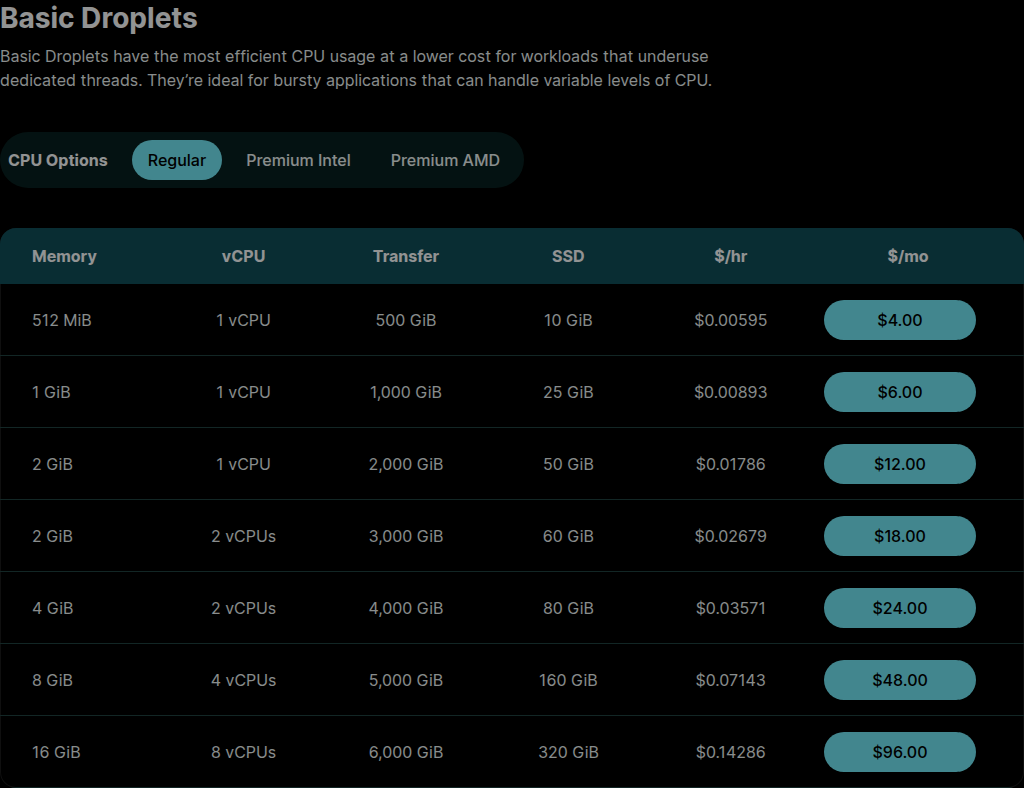
| App server | CPX22: 2 shared vCPU, 4 GB RAM, 80 GB NVMe | Basic Droplet: 2 vCPU, 4 GiB RAM, 80 GB SSD |
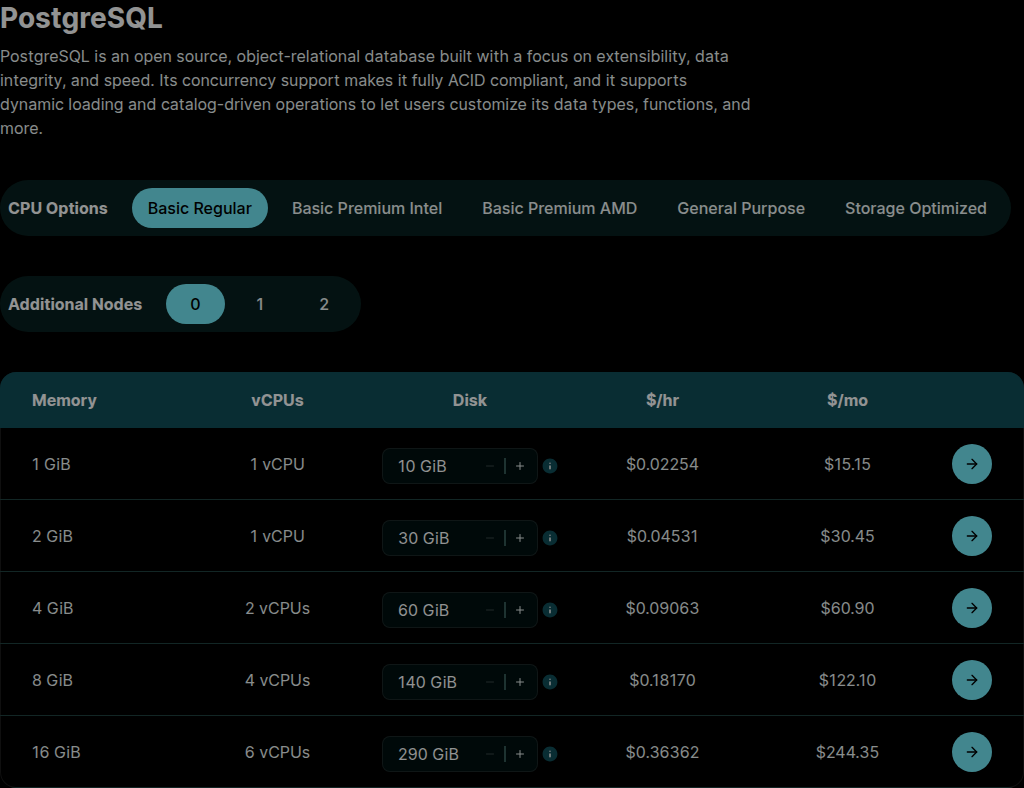
| Database | Postgres co-located on the same CPX (self-hosted) | Managed PostgreSQL Basic: 1 GiB RAM, 1 vCPU |
| Monthly price | €19.99/mo excl VAT (€25.09 incl 25.5% VAT) | $24.00/mo Droplet + $15.15/mo Postgres + storage ~$2-6 at $0.215/GiB |
| All-in | ~€20/mo excl VAT (€25.09 incl VAT; optional backup add-on ~€1.50/mo) | ~$41-46/mo |
| Included traffic | 20 TB/mo EU | 4,000 GiB/mo on the 4 GiB Droplet |
| You operate | OS, Node, Postgres install, upgrades, backups, failover | Just the app. DO handles DB patching, backups, and HA nodes |
Want more headroom on the app? Hetzner’s CPX32 (4 vCPU / 8 GB / 160 GB) is €35.99/mo excl VAT; DO’s CPU-Optimized line starts at $42/mo. The ratio holds at every size: DigitalOcean’s managed stack costs about 1.5-2x Hetzner’s self-managed stack for a comparable workload, and most of that premium is the managed database.
DO bills in USD and Hetzner in EUR, so the comparison shifts with the exchange rate. The structural fact does not: for the same sized workload, DO is meaningfully more expensive, and you get managed services in return.
Prices accurate as of August 2026; check the vendor’s site for current rates.
Hetzner’s case: cheapest raw compute, 20 TB traffic
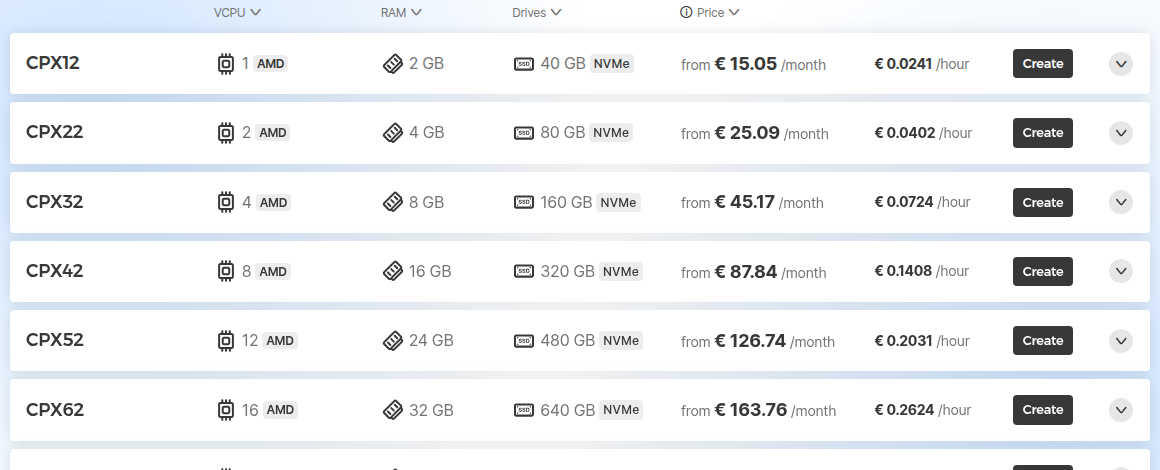
The CPX line is Hetzner’s price-performance sweet spot. for the current EU-central prices:
| Plan | vCPU | RAM | Disk | €/mo excl VAT | €/mo incl 25.5% VAT |
|---|---|---|---|---|---|
| CPX12 | 1 shared | 2 GB | 40 GB | €11.99 | €15.05 |
| CPX22 | 2 shared | 4 GB | 80 GB | €19.99 | €25.09 |
| CPX32 | 4 shared | 8 GB | 160 GB | €35.99 | €45.17 |
| CPX42 | 8 shared | 16 GB | 320 GB | €69.99 | €87.84 |
| CPX52 | 12 shared | 24 GB | 480 GB | €100.99 | €126.74 |
| CPX62 | 16 shared | 32 GB | 640 GB | €130.49 | €163.76 |
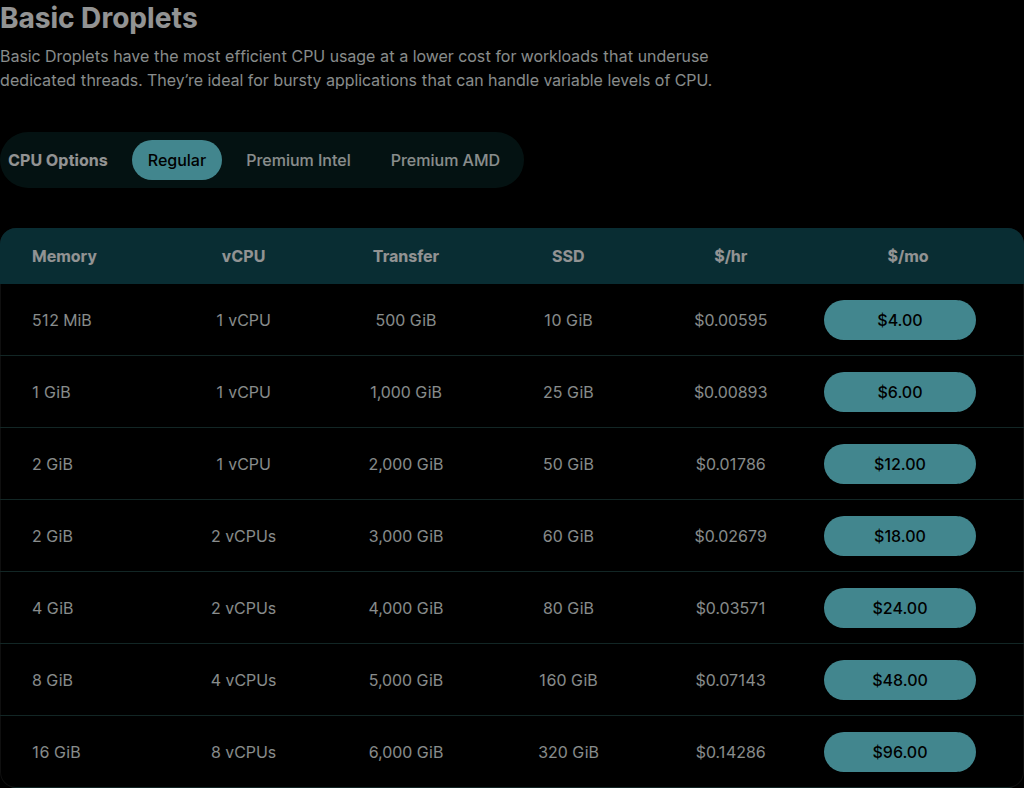
That table is the whole story on price. For raw vCPU and RAM per euro, DigitalOcean’s bundled Droplets are roughly 1.5-2x the price at every tier - the 4 GiB/2 vCPU Basic Droplet at $24/mo lines up against Hetzner’s CPX22 at €19.99, and the gap widens as you scale.
The traffic story is even more one-sided. CPX22 and up include at least 20 TB of EU traffic per month; the comparable DO Droplet bundles 4,000 GiB (about 3.9 TB) and charges for overage. For a traffic-heavy app, Hetzner’s included bandwidth alone justifies the switch. €1.26 for the per-extra-TB overage charge on EU locations.
Hetzner also keeps the infrastructure story simple: hourly billing with a monthly cap, free stateful firewalls, private networks, floating IPs, S3-compatible object storage, and a first-class API with Terraform/Ansible integration. Billing is hourly with a monthly cap - “your bill will never exceed its monthly price cap” is the stated model.
Where Hetzner loses:
- No managed databases. Postgres, MySQL, Redis - you install, patch, back up, and fail them over yourself. This is the single biggest functional gap versus DigitalOcean, and it is the main reason to pay DO’s premium.
- No managed Kubernetes. K8s on Hetzner is DIY (the API and Terraform provider are first-class, but there is no control-plane service).
- No PaaS. There is no “push code, get a URL” equivalent to DO’s App Platform. You configure Nginx or a load balancer and manage deploys yourself.
- Email-only support. 24/7, but no phone and no live chat. For urgent infra incidents that gets uncomfortable.
- Six cloud locations (Falkenstein, Nuremberg, Helsinki, Ashburn, Hillsboro, Singapore) versus DO’s 13+. Global latency-sensitive apps have fewer options.
- Linux only. Windows is not supported.
DigitalOcean’s case: managed everything
DigitalOcean’s answer to “Hetzner is cheaper” is: you are not just buying compute, you are buying un-operating infrastructure.
Managed databases are the flagship. PostgreSQL starts at $15.15/mo for 1 GiB / 1 vCPU on the Basic tier; MySQL is also $15.15, MongoDB $15.23, Valkey (Redis-compatible caching) $15.00, OpenSearch from $19.60, Kafka from $148.80. Storage bills on top at $0.215/GiB/mo. Add a standby node and the database keeps working through a host failure - no replication setup, no PITR scripts.
Managed Kubernetes (DOKS) has a free control plane - you pay only for the worker nodes, from $12/mo/node on Basic. HA control plane is +$40/mo. Pooled bandwidth starts at 2,000 GiB/node.
App Platform is the PaaS Hetzner has no answer to: free tier for static sites, then container instances from $5/mo. Push to GitHub, get a URL.
Bigger footprint. 13 regions worldwide versus Hetzner’s six - Bangalore and Singapore matter if your users are in Asia.
Per-second billing (effective January 1, 2026) with a 60-second minimum. Bundled plans keep a monthly cap; v5 Droplets are strictly hourly with no cap, which cuts short-lived workload costs but can surprise budget watchers.
Where DigitalOcean loses:
- Substantially more expensive per vCPU/RAM. The 1.5-2x ratio holds across the range. Run the workload table above and DO’s managed stack comes to about double Hetzner’s all-in cost.
- Stingier included traffic. 500 GiB to 6,000 GiB on bundled plans, versus Hetzner’s 20 TB in the EU. Traffic-heavy apps bleed on the overage charge.
- Shared vCPUs on Basic. Dedicated CPU costs more - CPU-Optimized from $42/mo, General Purpose from $63/mo.
- No free tier on Droplets. There is a promotional credit for new accounts, but no permanent free server (App Platform’s free tier is static sites only).
- US company. Frankfurt exists and DO is GDPR-compliant on paper, but if the “German data center” story matters to you or your customers, Hetzner is the GDPR-native answer.
- v5 Droplets have no monthly cap. Pay-per-second is great for batch jobs and dangerous for a fixed infra budget; set billing alerts.
- Free-tier support is no better than Hetzner’s. The default Starter plan is ticket-based only, same as Hetzner’s email support, with a “less than 24 hours” response target. Live chat needs the $99/mo Standard plan; a dedicated Slack channel and video calls need the $999/mo Premium plan.
Comparison table
| Dimension | Hetzner | DigitalOcean |
|---|---|---|
| 4 GB / 2 vCPU app server | €19.99/mo (CPX22, excl VAT) | $24/mo (Basic 4 GiB) |
| Managed Postgres entry | Not offered | $15.15/mo (1 GiB / 1 vCPU) |
| All-in Node + Postgres stack | ~€20/mo, self-managed DB | ~$41-46/mo, managed DB |
| Included traffic (EU) | 20 TB/mo on CPX22+ | 4,000 GiB/mo on 4 GiB plan |
| Managed databases | No | Postgres, MySQL, MongoDB, Valkey, OpenSearch, Kafka |
| Managed Kubernetes | No (DIY) | Yes, free control plane |
| PaaS (push code, get URL) | No | App Platform, from $5/mo |
| Regions | 6 | 13+ |
| Billing | Hourly with monthly cap | Per-second (60s min); bundled plans capped |
| Support | 24/7 email only | 24/7 ticket-based on the free Starter plan; live chat from $99/mo, Slack + video calls at $999/mo |
| GDPR-native | Yes (German DCs) | On paper (Frankfurt region) |
Bottom line
Pick Hetzner if you want the cheapest raw compute and the most included traffic, and you are willing to operate your own database. A Node + Postgres stack on one CPX22 costs about €20/mo - roughly half the price of DO’s managed equivalent - and the 20 TB of EU traffic is unmatched. Pick DigitalOcean if you would rather pay for managed databases, managed Kubernetes, or a PaaS, or if you need a global footprint beyond Europe - the premium is real, and the operational relief is real too.
Who this pick is wrong for: the DO pick is wrong for price-sensitive developers running low-traffic apps in Europe - you pay 2x for services a small app does not need, and Hetzner’s 20 TB of included traffic is wasted potential. The Hetzner pick is wrong for teams that cannot afford database downtime or a half-day support ticket - if Postgres is business-critical and you have no one on call to run it, DO’s managed database is worth the premium. And if you are only comparing entry-level prices, our best cheaper Hetzner alternatives roundup finds providers that beat both on the low end — including the Datalix vs Hetzner and Cherry Servers vs Hetzner head-to-heads for the budget and bare-metal ends of that field respectively.